
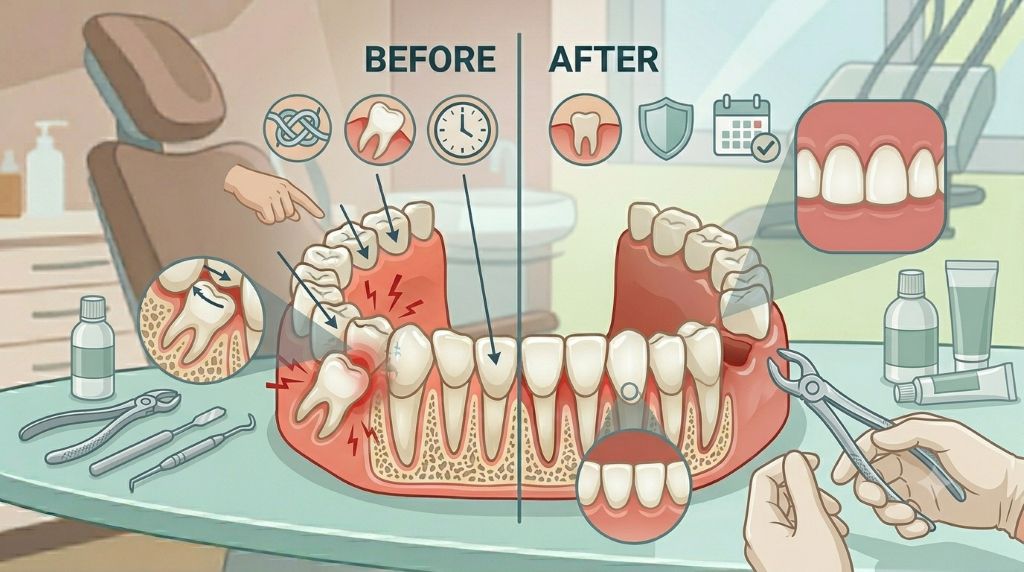
Wisdom teeth are the last permanent teeth to develop and often create oral health problems when there is not enough room in the jaw. Understanding the best time for Wisdom Teeth Removal can help prevent pain, infections, crowding, and future complications. Early evaluation and timely Wisdom Teeth Removal Treatment allow dentists to monitor tooth development and recommend care before issues become more serious. Whether you need a routine wisdom tooth extraction or a more complex procedure, removing wisdom teeth at the right age can protect your smile and support long-term oral health.
What Are Wisdom Teeth?
Wisdom teeth, also known as third molars, are the final permanent teeth to erupt. Most people develop four wisdom teeth, typically between the ages of 17 and 25.
Because they emerge later than other teeth, wisdom teeth often encounter limited space in the mouth. This can affect their ability to grow properly and increase the likelihood of requiring wisdom tooth removal.
Why Wisdom Teeth Often Cause Problems
Many people do not have enough room in their jaws to accommodate wisdom teeth. As a result, these teeth may:
- Become impacted beneath the gums.
- Grow at an angle.
- Push against neighboring teeth.
- Causes overcrowding.
- Increase the risk of infection.
When these issues occur, a dentist may recommend Wisdom Teeth Removal Treatment to prevent further complications.
What Is the Ideal Age for Wisdom Teeth Removal?
The timing of Wisdom Teeth Removal plays a major role in treatment success and recovery. Most dental professionals recommend evaluating and removing problematic wisdom teeth before they lead to pain, infection, or damage to surrounding teeth.
Why Ages 17 to 25 Are Often Recommended
Dental professionals generally recommend Wisdom Teeth Removal between the ages of 17 and 25. During this stage:
- Tooth roots are not fully developed.
- Jawbone is less dense.
- Healing occurs faster.
- Surgical complications are less common.
This age range often provides the best opportunity for a smoother wisdom tooth extraction and recovery process.
Benefits of Early Wisdom Tooth Removal
Removing wisdom teeth at the right time can:
- Prevent damage to nearby teeth.
- Reduce infection risks.
- Avoid future orthodontic problems.
- Minimize discomfort and swelling.
- Support overall oral health.
Early treatment can also protect results achieved through orthodontic care and help avoid emergency dental situations.
Signs You May Need Wisdom Teeth Removal Treatment
Wisdom teeth do not always cause immediate symptoms, but certain warning signs can indicate underlying problems. Recognizing these symptoms early can help you seek Wisdom Teeth Removal Treatment before complications worsen.
1. Persistent Jaw Pain
Ongoing discomfort in the back of the mouth may indicate impacted wisdom teeth.
2. Swollen or Bleeding Gums
Inflamed gums around erupting wisdom teeth can signal infection or irritation.
3. Difficulty Opening Your Mouth
Impacted teeth can cause pressure that limits jaw movement and creates discomfort.
4. Repeated Infections Around Wisdom Teeth
Frequent infections often occur when wisdom teeth partially erupt and trap bacteria.
5. Crowding of Nearby Teeth
Wisdom teeth can shift surrounding teeth, affecting alignment and bite function.
If you experience any of these symptoms, consult a provider for Wisdom Teeth Removal in Phoenix, AZ as soon as possible.
What Happens If Wisdom Teeth Are Not Removed?
Leaving problematic wisdom teeth untreated can affect your overall oral health. Over time, impacted or partially erupted wisdom teeth may lead to infections, decay, gum disease, and damage to neighboring teeth and bone.
1. Impacted Wisdom Teeth
Impacted teeth remain trapped beneath the gums or jawbone and may cause pain and swelling.
2. Tooth Decay and Gum Disease
Wisdom teeth are difficult to clean properly, increasing the risk of cavities and periodontal disease.
3. Cysts and Jaw Damage
In some cases, impacted wisdom teeth can form cysts that damage surrounding bone and tissues.
4. Damage to Adjacent Teeth
Pressure from impacted wisdom teeth may weaken or damage neighboring molars.
Delaying Wisdom Teeth Removal Treatment can result in more complex procedures later in life.
Wisdom Tooth Extraction Process: What to Expect
Understanding the wisdom tooth extraction process can help reduce anxiety and prepare you for treatment. From consultation to recovery, each step is designed to ensure safe, comfortable, and effective Wisdom Teeth Removal.
- Initial Consultation and X-Rays
Your dentist will perform a comprehensive examination and take digital X-rays to assess the position of your wisdom teeth. - Planning Your Tooth Extraction
Based on your evaluation, a personalized treatment plan will be created to ensure safe and effective care. - The Wisdom Tooth Extraction Procedure
The procedure may involve local anesthesia, sedation, or other comfort options depending on the complexity of the extraction. - Recovery and Aftercare Tips
After a Tooth Extraction, patients should:- Rest for the first 24 hours.
- Follow dietary recommendations.
- Avoid smoking.
- Maintain proper oral hygiene.
- Attend follow-up appointments.
Most patients recover within a few days to a week.
Is Wisdom Teeth Removal More Difficult for Older Adults?
Although Wisdom Teeth Removal can be performed at almost any age, treatment is often more complex for older adults. Changes in bone density and root development may increase recovery time and treatment challenges.
Increased Risk of Complications
As people age, wisdom tooth roots become longer and more firmly attached to the jawbone.
Longer Recovery Times
Older adults often experience slower healing and increased post-surgical discomfort.
Why Early Treatment Is Often Preferred
Because healing is generally easier in younger patients, dentists frequently recommend early wisdom tooth removal when appropriate.
How to Know If Your Teen Needs Wisdom Teeth Removal
Many teenagers begin developing wisdom teeth during their late teens. Regular dental exams and X-rays help identify potential concerns early, allowing dentists to recommend Wisdom Teeth Removal before problems develop.
1. Regular Dental Checkups
Routine exams help monitor wisdom tooth development and identify potential concerns early.
2. Monitoring Tooth Development
X-rays allow dentists to evaluate whether wisdom teeth have sufficient room to erupt properly.
3. Signs Parents Should Watch For
Parents should watch for:
- Jaw pain
- Swollen gums
- Difficulty chewing
- Persistent bad breath
- Tooth crowding
Early detection can make Wisdom Teeth Removal simpler and more predictable.
Benefits of Professional Wisdom Teeth Removal
Choosing professional Wisdom Teeth Removal in Phoenix, AZ provides access to advanced diagnostics, experienced care, and personalized treatment planning. Early intervention can help prevent discomfort and protect long-term oral health.
- Advanced Diagnostic Technology
Modern imaging helps dentists accurately evaluate tooth position and treatment needs. - Comfortable Treatment Options
Many providers offer sedation options to improve patient comfort during treatment. - Personalized Care and Recovery Guidance
Professional dental teams provide detailed instructions to support healing and reduce complications.
If you are considering Wisdom Teeth Removal Phoenix AZ, choosing an experienced provider can help ensure successful outcomes.
Choosing the Right Tooth Removal Dentist
Selecting an experienced Tooth Removal Dentist is essential for safe and successful treatment. A qualified provider can accurately assess your needs, perform the procedure efficiently, and support a smooth recovery process.
- Experience With Wisdom Tooth Extraction
Select a dentist who regularly performs wisdom tooth extraction procedures and understands complex cases. - Emergency Dental Support
Having access to an Emergency Dentist Phoenix can be beneficial if complications arise unexpectedly. - Patient Reviews and Treatment Success
Reading reviews and testimonials can help you choose a trusted Tooth Removal Dentist with a strong reputation for patient care.
Conclusion
The best age for Wisdom Teeth Removal is typically between 17 and 25, when healing is faster, and complications are less likely. Early evaluation allows dentists to identify concerns before they affect your oral health. If you are experiencing symptoms or have concerns about your wisdom teeth, schedule an appointment with a trusted Tooth Removal Dentist. Professional Wisdom Teeth Removal Treatment can help protect your smile, prevent future dental problems, and support long-term oral health.
Frequently Asked Questions
What is the best age for wisdom tooth removal?
Most dentists recommend removing wisdom teeth between the ages of 17 and 25. During this period, roots are less developed, healing is faster, and the risk of complications is generally lower.
Can wisdom teeth stay in if they do not hurt?
Yes, if wisdom teeth are healthy, fully erupted, and properly aligned. However, regular dental evaluations are important because problems can develop even without noticeable symptoms.
How long does recovery take after wisdom tooth extraction?
Most patients recover within 3 to 7 days after wisdom tooth extraction. Complete healing of the extraction site may take several weeks, depending on the complexity of treatment.
Is Wisdom Teeth Removal Treatment painful?
The procedure itself is usually comfortable because local anesthesia or sedation is used. Mild soreness and swelling afterward are normal and can be managed with proper aftercare.
What are the risks of delaying wisdom tooth removal?
Delaying treatment may increase the risk of infection, tooth decay, gum disease, cyst formation, and damage to nearby teeth. Recovery may also become more difficult with age.
How do I know if I need a Tooth Extraction in Phoenix, AZ?
Persistent pain, swelling, infection, crowding, or impacted teeth may indicate the need for treatment. A dental examination and X-rays can determine if extraction is necessary.


