
Losing a tooth is more than a cosmetic concern. It can affect your ability to chew, speak clearly, and maintain proper oral health. After undergoing Tooth Extraction in Phoenix, AZ, one of the most important decisions is determining the ideal time to replace the missing tooth. The right timing depends on several factors, including the healing process, the condition of your jawbone, the presence of infection, and the type of restoration you choose.
At Gentle Hands Family Dentistry, we carefully evaluate every patient to recommend the most effective treatment plan. Whether you need a dental implant, bridge, or denture, working with an experienced dentist in Phoenix ensures the best possible outcome while preserving your smile for years to come.
Why Replacing a Missing Tooth Matters
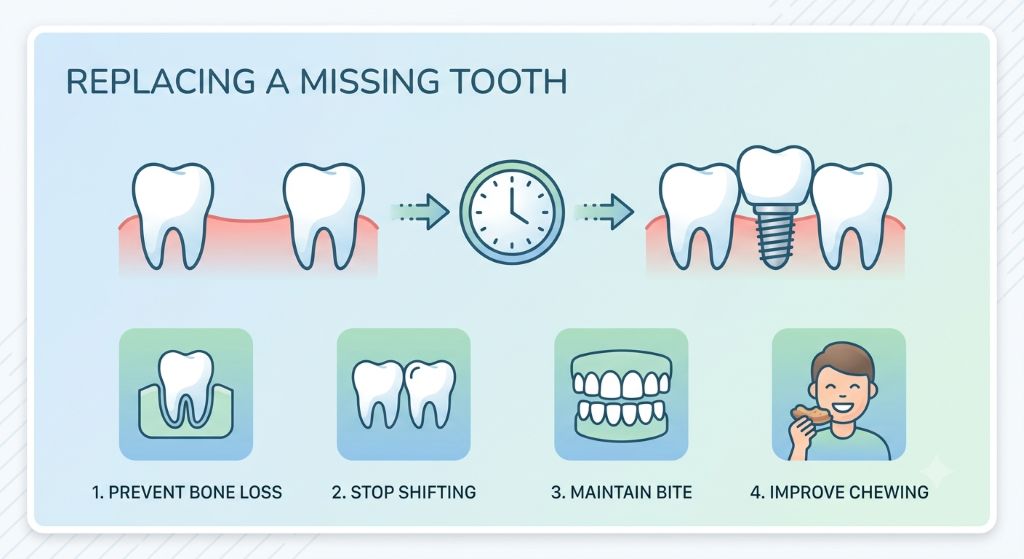
Replacing a missing tooth promptly protects both your oral health and overall well-being. Even one missing tooth can trigger a chain reaction that affects your entire mouth.
1. Prevents Jawbone Loss
Once a tooth is removed, the surrounding jawbone no longer receives stimulation from the tooth root. As a result, the bone gradually shrinks, making future restoration more challenging.
2. Stops Teeth from Shifting
Adjacent teeth naturally drift toward the empty space over time. This movement can create crowding, gaps, and alignment problems that may require additional dental treatment.
3. Maintains a Healthy Bite
Missing teeth change how your upper and lower teeth fit together. An uneven bite can increase stress on healthy teeth and contribute to jaw discomfort.
4. Improves Chewing and Speech
A complete smile allows you to chew efficiently and pronounce words clearly. Replacing a missing tooth restores proper function and confidence.
5. Preserves Facial Appearance
Jawbone deterioration caused by missing teeth may lead to facial sagging and premature aging. Early replacement helps maintain natural facial support.
How Long Should You Wait After a Tooth Extraction?
Every patient heals differently after Tooth Extraction in Phoenix, AZ. The ideal timeline depends on the complexity of the extraction, your overall health, and the restoration recommended by your dentist.
1. Immediate Tooth Replacement
For selected patients, immediate dental implant placement is possible on the same day the tooth is extracted.
Who Qualifies?
Patients may qualify when:
- Healthy surrounding bone is present.
- There is little or no active infection.
- Gum tissues are healthy.
- Good overall oral health is maintained.
Benefits
- Fewer surgical procedures
- Shorter overall treatment time
- Better preservation of jawbone
- Reduced healing period
- Improved aesthetics
Limitations
Immediate placement is not appropriate if there is extensive bone loss, severe infection, or inadequate implant stability.
2. Early Tooth Replacement (6–8 Weeks)
Many patients benefit from waiting approximately six to eight weeks after extraction.
During this period:
- Soft tissues heal properly.
- Inflammation subsides.
- Infection risks decrease.
- Gum tissue becomes healthier for implant placement.
This timing often provides an excellent balance between healing and preserving bone volume.
3. Delayed Tooth Replacement (3–6 Months)
Some situations require additional healing before replacing the tooth.
These include:
- Surgical extractions
- Significant bone loss
- Bone graft procedures
- Severe infections
- Impacted teeth
Waiting allows the bone graft to mature and creates a stronger foundation for future implants. Patients visiting a trusted Dental Implant Clinic in Phoenix often receive imaging during this period to monitor bone healing before implant placement.
Factors That Determine the Right Time for Tooth Replacement
Several clinical factors influence when a missing tooth should be replaced, including bone quality, infection, gum healing, overall health, and lifestyle habits. A thorough evaluation ensures the best long-term outcome. Then your tooth should be replaced.
1. Bone Quality and Quantity
Healthy bone is essential for supporting dental implants. If bone density is insufficient, your dentist may recommend bone grafting before implant placement.
2. Presence of Infection
Active infection must be completely resolved before placing an implant. Healing first reduces the risk of implant failure.
3. Gum Healing
Healthy gums provide a stable seal around restorations and contribute to long-term implant success.
4. Overall Health Conditions
Medical conditions such as diabetes, immune disorders, or medications affecting healing may influence treatment timing.
5. Smoking and Lifestyle Habits
Smoking significantly slows healing and increases implant complications. Patients who stop smoking often experience improved outcomes.
What Are Your Tooth Replacement Options?
Modern dentistry offers several reliable ways to replace missing teeth. Your dentist will recommend the most suitable option based on your oral health, functional needs, and long-term goals.
1. Dental Implants
Dental implants remain the gold standard for replacing missing teeth.
Benefits include:
- Permanent solution
- Natural appearance
- Excellent chewing function
- Bone preservation
- Long-term durability
- Easy maintenance
Choosing an experienced Dental Implant Clinic in Phoenix helps maximize implant success and long-term stability.
2. Dental Bridges
Dental bridges replace one or more missing teeth by anchoring to neighboring teeth.
Advantages include:
- Faster treatment
- Excellent aesthetics
- Reliable function
- Fixed restoration
However, bridges require reshaping healthy adjacent teeth.
3. Partial Dentures
Partial dentures are removable appliances designed to replace several missing teeth.
Benefits include:
- Affordable treatment
- Easy replacement of multiple teeth
- Non-surgical option
Your experienced dentist in Phoenix can help determine which restoration best matches your oral health, lifestyle, and budget.
Can Wisdom Teeth Require Replacement?
Most Wisdom Teeth Removal Phoenix, AZ procedures do not require replacing the extracted tooth.
Wisdom teeth are the third molars located at the back of the mouth. They frequently become impacted, partially erupted, or cause crowding, pain, and infection. Since they usually have little functional value, replacement is unnecessary.
Replacement becomes important only when other permanent teeth are extracted. Teeth such as molars, premolars, or front teeth play significant roles in chewing, speaking, and maintaining bite alignment. These teeth should generally be replaced to preserve long-term oral health.
Signs You Should Replace a Missing Tooth Soon
Ignoring a missing tooth can lead to additional dental problems. Recognizing early warning signs allows timely treatment, helping preserve your jawbone, bite alignment, and overall oral function.
Do not ignore these warning signs after tooth extraction:
- Neighboring teeth begin shifting.
- Jawbone starts shrinking.
- Difficulty chewing certain foods.
- Bite feels uneven.
- Changes in speech.
- Visible gaps affecting your smile.
- Food constantly becomes trapped in space.
- Increased wear on remaining teeth.
Prompt evaluation helps prevent more extensive treatment later.
Interesting Read: How Modern Dentistry Makes Tooth Extractions Surprisingly Easy
What Happens If You Wait Too Long?
Delaying tooth replacement can result in bone deterioration, shifting teeth, bite problems, and more complex restorative procedures. Early treatment often provides simpler, more predictable, and lasting results.
- Bone Deterioration
The jawbone naturally shrinks after tooth loss, reducing support for future restorations.
- Bone Grafting May Become Necessary
Significant bone loss often requires grafting before implants can be placed.
- Higher Treatment Costs
Advanced bone loss and shifting teeth may increase the complexity and cost of treatment.
- More Difficult Implant Placement
Less available bone can limit implant size and positioning.
- Reduced Treatment Options
Extended delays may eliminate immediate implant opportunities and require alternative restorations.
Is a Dental Implant the Best Long-Term Solution?
Dental implants are widely considered the most durable and natural-looking tooth replacement option. They restore function, preserve jawbone health, and provide excellent long-term stability for many patients.
- Exceptional Success Rate
Dental implants have an excellent long-term success rate when placed by experienced professionals and maintained with proper oral hygiene. - Outstanding Durability
Unlike many other restorations, implants can last decades with appropriate care.
- Natural Appearance
Implant-supported crowns closely resemble natural teeth in color, shape, and function.
- Preserves Jawbone
Because implants stimulate the jawbone like natural roots, they help prevent bone loss.
- Superior Comfort
Unlike removable dentures, implants remain securely fixed without slipping during eating or speaking.
Choosing a reputable dental implant clinic in Phoenix provides advanced technology, detailed imaging, and personalized treatment planning for optimal outcomes.
When Should You See a Dentist After Tooth Extraction?
Regular follow-up visits after tooth extraction allow your dentist to monitor healing, evaluate bone health, and determine the ideal time to begin your personalized tooth replacement treatment. Routine follow-up appointments are essential after Tooth Extraction in Phoenix, AZ.
Your dentist will:
- Evaluate healing.
- Monitor gum tissue.
- Take digital X-rays if necessary.
- Assess bone levels.
- Discuss implant timing.
- Develop a customized treatment plan.
If you experience severe pain, persistent bleeding, swelling, or signs of infection, contact an Emergency Dentist in Phoenix immediately for prompt evaluation and treatment.
Tips for Faster Healing After Tooth Extraction
Proper aftercare following a tooth extraction promotes faster healing and reduces complications. Healthy recovery creates a strong foundation for successful tooth replacement and long-term oral health.
- Follow all post-operative instructions carefully.
- Avoid smoking or tobacco products.
- Eat soft, nutritious foods.
- Keep the extraction site clean.
- Protect the blood clot during healing.
- Stay hydrated.
- Avoid strenuous physical activity for the first few days.
- Attend every scheduled follow-up appointment.
- Take medications exactly as prescribed.
Healthy healing creates the ideal foundation for future restoration.
Why Choose Gentle Hands Family Dentistry in Phoenix for Tooth Replacement?
At Gentle Hands Family Dentistry, we provide comprehensive restorative care focused on long-term success and patient comfort.
Our patients choose us because we offer:
- Experienced implant professionals
- Advanced digital imaging technology
- Personalized treatment planning
- Comfortable, patient-centered care
- Comprehensive restorative dentistry
- Modern implant techniques
- Same-day emergency appointments
- Compassionate support throughout treatment
Whether you need a consultation after Tooth Extraction in Phoenix, AZ, implant planning, or urgent care from an Emergency Dentist, our experienced dentist in Phoenix is committed to restoring your smile with precision and compassion.
Conclusion
Replacing a missing tooth at the right time protects your oral health, preserves jawbone strength, and restores your smile with long-lasting results. After Tooth Extraction in Phoenix, AZ, the ideal timeline depends on your healing, bone quality, and individual treatment needs. At Gentle Hands Family Dentistry, our experienced dentist in Phoenix team provides personalized evaluations to determine the best replacement option for every patient.
Schedule your consultation today to protect your bone, restore full function, and achieve a healthy, natural-looking smile with expert care from our trusted dental team.
Frequently Asked Questions
Can I get a dental implant immediately after extraction?
Yes. Some patients qualify for immediate implant placement if the extraction site has healthy bone, no active infection, and adequate stability. Your dentist will evaluate healing, bone quality, and overall oral health before recommending same-day treatment.
How long does it take for the bone to heal after tooth extraction?
Bone healing usually takes three to six months, depending on the extraction complexity, your health, and whether bone grafting was performed. Your dentist will monitor healing with follow-up exams and X-rays before recommending implant placement.
What happens if I don’t replace a missing tooth?
Leaving a missing tooth untreated can lead to bone loss, shifting teeth, bite changes, chewing difficulties, speech issues, and additional dental problems. Early replacement helps preserve oral health and prevents more complex treatments later.
Is replacing a missing tooth painful?
Most tooth replacement procedures involve local anesthesia and are performed comfortably. Mild soreness afterward is normal and typically managed with medication, rest, and proper aftercare as directed by your dentist during recovery.
Do wisdom teeth need to be replaced after extraction?
No. Most Wisdom Teeth Removal Phoenix, AZ procedures do not require replacement because wisdom teeth generally have little functional value. Other permanent teeth, however, should usually be replaced to maintain proper oral function.
Can an emergency dentist remove and replace a tooth?
Yes. An Emergency Dentist in Phoenix can evaluate damaged teeth, perform extractions when necessary, and discuss replacement options. Depending on your condition, immediate or delayed implant treatment may be recommended after healing.
How do I know if I need a bone graft before an implant?
Your dentist uses digital X-rays and advanced imaging to measure jawbone volume. If there is insufficient bone to securely support an implant, a bone graft may be recommended to improve long-term implant stability.